
As remote work becomes the norm, knowing how to access your Mac from anywhere is more important than ever. Apple has made this process simple, and with the help of third-party apps, it's easier than you might think.
Still, I know remote management can be intimidating. That's why I've put together this easy-to-follow guide to walk you through it. We'll cover everything you need to control your Mac remotely – whether it's accessing files, editing documents, or completing tasks as if you were right there.
And if you prefer to learn by watching, check out this video tutorial for quick and easy remote Mac access.
Top sharing method
Use Dropshare to upload files to any cloud storage and share them instantly with a link. Bonus: Get 10 GB of storage free with Setapp!
Security-testedAfter researching and testing for myself, I’ve found three reliable ways to remotely access your Mac:
I’ve created this guide to make these methods easy to understand, even if you’re not very tech-savvy, so you can confidently log in to your Mac from anywhere.
Let's start with Secure Shell. This method is ideal for those with some technical knowledge. However, Apple has made it straightforward enough for anyone, even if you’re not very tech-savvy.
Before you can access your Mac remotely, you’ll need to configure access on the Mac you want to log in to. Here’s how to set it up:
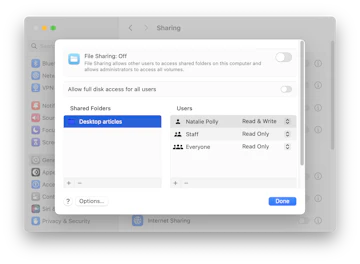
Before you try to access your Mac from another device, make sure you’ve safely noted down these important details:
Write them down and keep them safe, as allowing access to your Mac does make it potentially less secure, especially over cellular or public Wi-Fi networks.
Now that you’ve set up remote access on your Mac, you can use Terminal or any Secure Shell (SSH)-enabled app to create a simple Secure File Transfer Protocol (SFTP). With just your username and IP address, you’ll be able to access, control, or view information on your Mac — as long as it’s powered on. Depending on the macOS versions on both devices, you may also need your password.
If you’re not confident using Terminal or setting up an SFTP, don’t worry. There’s an easier way, especially if you’re running a relatively recent version of macOS.
With macOS remote Mac access, things are easier. To set up it:
Control your Mac from iPhone
Use Remote Mouse to manage your Mac from anywhere — shut it down, adjust the volume, and more, all from your iPhone. Perfect for when your Mac is out of reach!
Security-testedToday we have plenty of ways to send and share files. But ask someone to send something, and you are likely to get it through email. Due to the ubiquitousness of email, it's still the default method for file sharing, despite its obvious flaws and constraints.
Fortunately, there are much better ways:
Few people know that their Mac has native file sharing functionality built-in. To use this feature: System Settings > General > Sharing and enable File Sharing. If you only want to share specific folders, add them to the Shared Folders list. If you only want specific users to access the folder, add them to its Users list. Otherwise, everyone will be able to access it.
Although not the most reliable solution, AirDrop works fine for occasional sharing a file between Apple devices. In the Finder, choose Go and then AirDrop on both the sending and receiving Mac. As soon as you see the receiver's user icon, drag the desired file onto it to send.
If you don't want to send files Mac-to-Mac directly but rather through a cloud storage, there is no easier way – Dropshare. The app works with numerous cloud providers, from Dropbox to Google Drive, and saves your files for sharing by simply dragging them onto its menu bar icon.
The most technical but also the most robust way to share files from your Mac is to use FTP, which you could do either through Terminal or an FTP Client, the latter being much more user friendly.
There are a few popular FTP clients one could choose from. The robust file managing app ForkLift covers most of the FTP functionality but takes it to the next level and could be a viable replacement for the Finder altogether with its quick search, instant previews, and file comparison.
DCommander is another full-featured file transfer app for Mac that combines speed and reliability, able to handle thousands of files, schedule backups, and even automate transfers.
At last, when it comes to sharing the same files on different devices, an app like ChronoSync Express becomes invaluable.
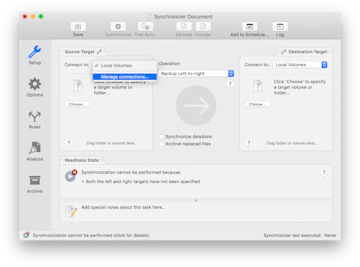
ChronoSync Express is a powerful tool for sharing and transferring files from Mac to Mac, or any other Apple device. With a feature called Synchronizer Document, you can select which files need to be automatically synchronized and shared between devices, just like that:
From my own experience, whether I’m working directly on my Mac, logging in remotely, or sharing access with someone else, security is always my top priority.
One thing I’ve learned is that using a VPN (Virtual Private Network) is crucial, especially when you’re connected to a public Wi-Fi network. It’s surprisingly easy for someone to intercept the information you’re sending, just as easily as you can access it.
When you’re accessing your Mac remotely — even in View Only mode — someone could potentially see everything on your screen, including files and documents that aren’t password-protected. And if you’ve left passwords in a visible document, you’re putting yourself at serious risk.
That’s why I always use a secure VPN client on my Mac. Me personal favorite is ClearVPN. It’s a simple step that adds a strong layer of protection, especially when dealing with sensitive files, financial records, or customer data. It’s well worth it to keep unwanted eyes from lurking around.
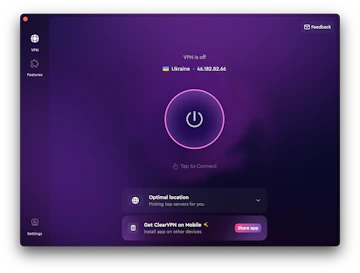
However, for extra peace of mind and security, consider firing up your VPN automatically on all networks you are not 100% sure about to keep your emails, bank accounts and personal documents safe.
To share your Mac with someone else, download a remote Virtual Network Computing (VNC) app like Jump Desktop. With full remote access and Mac remote control, the other person — or yourself connecting to another Mac — can have the same level of control as the person using that device. Except for Admin level access, since it's password protected.
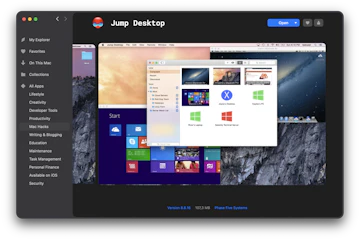
Starting with Jump Desktop is easy: either yourself (gaining access) or the person you are giving a remote view or control access to your Mac, needs to add details of the device and the password.
Once permission is granted at the other end, remote Mac screen sharing or control (whereby you can use the iOS device as a remote mouse) becomes possible.
Imagine you’re sitting in a hammock on a patio in East Asia, working remotely. Did you know you can control your Mac using your iPhone or iPad? It’s like turning your device into a wireless mouse for your Mac, and it’s incredibly easy.
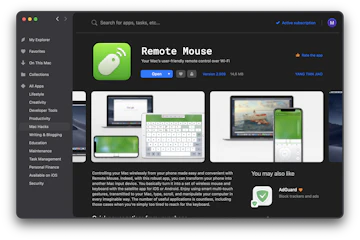
One of the simplest tools I’ve found for this is Remote Mouse. It quickly turns your iOS device into a remote control for your Mac, making it easy to manage your work from anywhere.
So, there you have it — I’ve shared the instructions and apps I personally use. I hope this guide helps you out. If you want to try these apps, they’re all available on Setapp . It is a subscription service that gives you access to a curated collection of top-notch Mac, iOS, and web apps, all in one place. The best part? You can use every app for seven days at no cost! When your free trial is over, Setapp is only $9.99 per month for continuous access to its incredible suite of apps. Give it a try!
We'll finish up answering some of the most common questions you might have about remote Mac access.
It's possible to access Windows apps or any resources on a Windows computer from your Mac. Here's how it works:
If you use a Mac to control a PC, one of the most essential commands you should get a grip of is Ctrl+Alt+Del. It will allow you to get access to Force Quit options. To Ctrl+Alt+Del, go to your Remote Desktop Client > Actions > Ctrl+Alt+Del.
It's not enough to just move the Microsoft Remote Desktop client to the Trash, you'll have to get rid of all user names, passwords, and system files generated since you've been using the client for remote access. The easiest way is to completely uninstall Remote Desktop with CleanMyMac X — it will delete all the associated files, too.
Or, you can uninstall the client manually:
The easiest way is to copy from admin to client computers:
If you want to learn about more ways to transfer files between Mac and PC — for example, you can do it with drag and drop — read this Apple Support article.
